

My Family Is Everything. But I’m Still Someone.
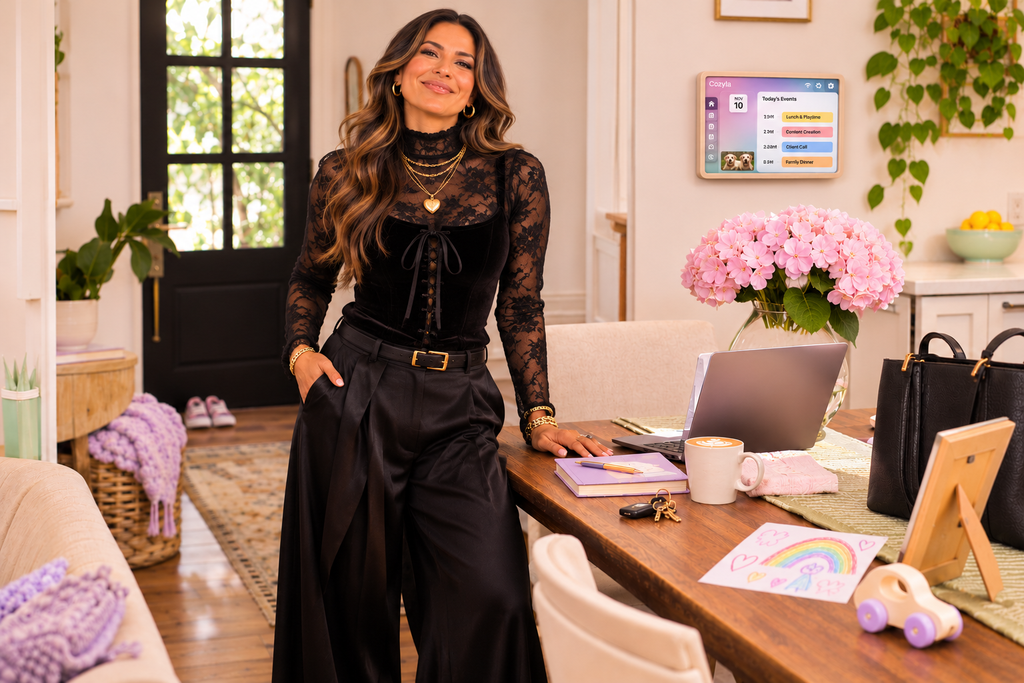
When I say I want more, I mean freedom. My own money. Work I care about. Travel and memories. Time with my daughter while she learns how to be a little human and I learn how to be her mom.
Apparently, my dream job description includes “fulfilling, pays well, and lets me be there for the good stuff.” A girl can have requirements and dreams, right? 😂
But underneath that wish list is something I take very seriously: I want to be able to take care of myself.
When my first marriage ended, I was left with the clothes in my closet and my pug Luna. That experience stays with you. It’s part of why having something of my own matters so much to me now.
I’ve seen how women’s own wants can slowly disappear into what their families need. The work gets put aside. The hobbies become something they used to do. Their money, their interests, their plans, everything becomes “ours,” until it gets difficult to say what’s still “mine.”
And when leaving means wondering how you’ll survive financially, “just leave” is a painfully incomplete sentence.
I want to help change that pattern, starting with my own life. I want my daughter to know a mother who loves her deeply and also has passions, ambitions, and options. A woman she gets to know beyond what I do for her.
Maybe for you, that means keeping a career you love. Starting again after a breakup. Having your own savings. Taking a class nobody in your house has any interest in. Please, let someone else have an opinion about dinner while you go learn pottery.
Our families can mean everything to us without becoming all of who we are.
I’m grateful for my life. I want to keep building it, with room for the people I love and the woman doing the loving.
What’s something of your own you want to build, keep, or make room for again?
When “Ours” Gets So Big That “Mine” Disappears
Somewhere along the way, women were sold a very strange idea about love: if we truly love our families, we should be happy putting everything into them. Our time, attention, energy, money, dreams, and possibly the last good snack in the house should all be available for public use.
We become the person who knows everyone’s schedule, finds the missing shoes, keeps the relationship connected, remembers the birthdays, plans the vacations, buys the gifts, makes the appointments, and knows which cup will cause a full toddler uprising. Because we love the people we’re doing it for, we’re expected to find the work endlessly fulfilling.
And yes, love can make the work meaningful. But meaningful and all-consuming are not the same thing.
Your family can be the most important part of your life without becoming the only part of you that is allowed to exist. Your relationship can be a priority without requiring you to merge into one household organism that shares a Costco membership and apparently no longer has individual dreams.
“Ours” can be beautiful. Our home, our family, our plans, our future, our collection of charging cables that somehow never includes the one anyone needs. But “ours” is healthiest when both people are still allowed to have a “mine.”
My interests. My friendships. My work. My money. My time. My choices. My ridiculous pottery bowl that nobody else understands but I made it, so please display it respectfully.
Wanting something of your own does not mean you are rejecting what you share. It means you understand that loving other people and belonging to yourself are not opposing goals. Love should add people to your life; it should not quietly remove you from it.
Having Your Own Money Is Not the Same as Planning Your Escape
There can be something uncomfortable about saying, “I want my own money,” especially when you are married or building a life with someone. It can sound like you are secretly preparing to disappear in the night with a suitcase and the good towels.
But wanting financial independence does not mean you are betting against your relationship. It means you understand that your security, confidence, and ability to make choices should not depend entirely on another person—even when that person is loving, trustworthy, and committed to you.
Money affects which choices are available to us. It determines whether we can recover after a breakup, take time away from a job, afford childcare, return to school, start a business, hire help, or simply buy something without feeling as if we need permission. It can also affect whether someone is realistically able to leave an unhealthy or unsafe relationship. That is why “just leave” is not advice; it is the beginning of a complicated conversation about money, housing, children, safety, transportation, support, and about seventeen other things.
None of this means every woman needs to earn exactly the same amount as her partner or maintain an entirely separate financial life. Families divide responsibilities in different ways. Sometimes one person works outside the home while the other handles more of the caregiving. Sometimes both people earn money. Sometimes someone steps back temporarily because children, health, layoffs, or life have laughed at the original spreadsheet.
What matters is that every adult understands the household finances and has meaningful access to them. Knowing where the money is, how the bills are paid, what debt exists, which accounts are open, and what resources would be available during an emergency is not pessimistic. It is basic adulthood.
Wanting your own income also does not mean you believe unpaid work has no value. Caring for children is work. Running a home is work. Managing the family calendar, meals, appointments, emotional needs, and tiny-person logistics is work. You can believe all of that—and still want direct deposit. I certainly do.
Motherhood Expanded Me. It Did Not Replace Me.
Becoming a mother changes you. Your priorities shift, your time stops behaving as if it belongs exclusively to you, and your brain opens approximately four thousand tabs. At least twelve of those tabs are playing music, but you cannot locate a single one.
You discover an entirely new kind of love and an entirely new kind of exhaustion. Parts of your old life stop fitting, while new parts of you appear before you’ve had time to understand them. It can feel like becoming a different person while everyone around you assumes you should instantly know how to be her.
But motherhood is something we become. It is not everything we stop being.
Maintaining an identity outside motherhood does not mean distancing yourself from your children. It means allowing them to know the whole woman raising them. I want Rexxie to know that I love being her mom, but I also want her to know that I have ideas. I make things. I care about my work. I take risks, learn new skills, earn money, get things wrong, start again, and build a life that excites me.
I don’t want to teach her that being a good mother means slowly handing over every piece of yourself until there is nothing left that does not serve somebody else. I want her to see that women can love fiercely without disappearing.
That lesson will not come from a speech I give her one day. It will come from what she watches me permit myself to do.
Children notice whether Mom has interests, whether her work is respected, whether she gets time to rest, and whether she is always the person expected to adjust. They notice whether the women around them are allowed to want things.
That does not mean they need to watch us chase every ambition at full speed while preparing organic snacks and maintaining a spotless home. Nobody asked for that performance. Sometimes maintaining an identity outside motherhood happens in twenty-minute pieces: answering one email during nap time, taking one class, saving a small amount of money, reading something that has nothing to do with parenting, or asking your partner to handle bedtime while you work on an idea.
The goal is not to prove that you can do everything. It is to show yourself—and your children—that you are included in the life you are working so hard to build.
Healthy Relationships Need Two Whole People
The goal of a healthy relationship is not to become one person. That sounds romantic until nobody knows whose dream was canceled, whose needs keep getting postponed, or why one person has become the household project manager while the other keeps asking where things are.
Healthy love makes room for two people with separate interests, inner lives, friendships, goals, and opinions about how Saturday should be spent. Individuality is not the enemy of commitment. In a strong relationship, each person should be able to grow without the other treating that growth like a threat.
Creating that kind of relationship requires conversations that can feel awkward, particularly when the current arrangement technically “works.” Sometimes, however, it only works because one person has become very good at swallowing what she wants.
If you need more room for yourself, try saying it before resentment starts writing the speech for you. You might say, “I love the life we’re building, but I need regular time for something that belongs to me.” Or, “I want to contribute financially again, and I need us to talk about what support would make that possible.”
You could also say, “I’ve realized almost everything I do is connected to the family. I want to make room for one goal that is mine.”
You are not asking permission to become a person. You are asking your partner to help create a life where both people get to remain one.
I think we sometimes confuse dependence with devotion. We treat needing someone as proof of how much we love them, but being unable to function outside a relationship is not the same as freely choosing that relationship. I do not want to stay in a life because I have no idea how I would survive outside it. I want to stay because it is the life I continue to choose.
A woman with money, skills, friendships, interests, and confidence is not less committed to her family. She is not secretly halfway out the door because she has a savings account and a LinkedIn profile. She simply has options, and options matter even if she never needs to use most of them.
The ability to support yourself changes how you move through the world. It can make your yes more honest because it was not forced by fear. That is what I want for myself, and it is absolutely what I want Rexxie to learn.
What Is Still Yours?
If everything in your life currently feels like “ours,” you do not need to blow up the family schedule and announce a personal renaissance on Monday. Honestly, that sounds exhausting, and we already have plans.
Start by asking yourself a smaller question: What is still mine?
Not what you manage for everyone. Not what you do because someone else needs it. Not the interest you share with your partner because it is easier than explaining why you would rather do something else. What belongs specifically to you?
Maybe it is something financial: income, savings, credit in your own name, a better understanding of the family finances, or a plan for returning to paid work. The goal is not secrecy in a healthy relationship. The goal is access, knowledge, and the ability to participate in decisions that affect your life.
If asking questions about money, accessing household funds, working, or saving causes fear because someone is controlling or monitoring you, that is a different situation. You deserve specialized, confidential support—not generic advice telling you to “just leave.”
Maybe what is yours is creative or intellectual. Take the class. Write the story. Learn photography. Study astrology. Start the newsletter. Make the jewelry. Go learn pottery and return with a beautifully imperfect bowl that your household will be required to admire.
Your interest does not have to become a business. It does not need to improve the family, generate income, or make sense to anyone else. Enjoyment is a sufficient purpose.
Maybe you need something social. Stay connected to people who know you outside your family roles—the friend who remembers you before this version of your life, or the woman who wants to discuss ideas, work, books, style, gossip, travel, or anything besides whether your child ate lunch. Community gives us perspective. It reminds us that we exist in more than one room.
And maybe what you want is ambitious. You are allowed to have a goal that would still matter to you even if nobody else benefited from it. Ambition does not make you selfish, less committed, or less maternal. Wanting to discover what you are capable of is not a character flaw.
You are also allowed to choose something just because it is fun. Fun is often the first thing women eliminate because there is always something more productive we could be doing: laundry, emails, groceries, research, or organizing the drawer that somehow contains batteries, birthday candles, and one mysterious key.
But fun is not a reward reserved for women who have completed every task. You are allowed to enjoy your life while it is still unfinished.
Start With One Piece
You do not need to reclaim your entire identity this weekend. Choose one piece.
That might be one hour every week that stays yours. One small savings goal. One application. One class. One coffee with someone who makes you feel like yourself. One project you continue even when progress is laughably slow. One honest conversation about the support you need.
Your life may not currently have room for a dramatic reinvention. That does not mean it has no room for you. Small pieces count because they become evidence that you are still here.
We say we would do anything for our families, but sometimes the thing our families need is for us to stop treating ourselves like an expendable resource. A family does not become stronger because one woman disappears into it. A relationship does not become healthier because one person has no options. A child does not benefit from learning that love requires self-erasure.
Your family can be everything to you, and you can still be someone with meaningful work, money you understand, interests that do not require group participation, friendships, dreams, plans, and a future you are actively helping shape.
You do not have to choose between loving your people and belonging to yourself. There is room for both.
And if there is not enough room yet, that does not mean you are asking for too much.
It means it is time to move some things around.
What’s something of your own you want to build, keep, or make room for again?
Tell me in the comments—or send this to the woman who loves her family deeply but needs a reminder that she belongs in her own life too.
Want more honest conversations about identity, relationships, motherhood, ambition, and the beautiful mess of trying to hold all of it?
💌 THE MESS CONTINUES EVERY SUNDAY.
Letters From the Mess is your weekly dose of real life, good finds, things worth sharing, and whatever the fuck we’re figuring out this week.
Subscribe
Letters from the Mess
A monthly email full of real talk, cosmic insights, badass affirmations, and the must-have products that will help you survive (and slay) this messy season of life.
